
Dialysis of Drugs
Renal Pharmacy Consultants LLCMedical
2.145.00 Reviews
- Version
- 3.51
- Installs
- 10.00K
- Age Rating
- Everyone
Screenshots
Our Review of Dialysis of Drugs
 Analysis by Appyee
Dialysis of Drugs is a focused medical reference app from Renal Pharmacy Consultants LLC. I see its purpose as very clear: it helps users check whether medicines are dialyzable, an important question when caring for people who receive dialysis. It is not designed to replace clinical judgement, and it is not the kind of app most people open casually. Its value appears when a medication decision depends on how dialysis may affect drug removal.
The app is free to install, carries an Everyone age rating, and has reached over ten thousand installs. Its average rating is 2.1 from over one hundred ratings, so I would approach it with realistic expectations rather than assuming a polished, modern consumer experience. The current version is 3.51 and it works on Android 5.0 or later. Those details matter because this is a specialist tool with a fairly narrow audience, not a general health tracker.
What to expect before you begin
The first thing I would tell a new user is that the app’s short name describes its job better than any broad promise could: it is about the dialysis of drugs. The useful question is not “What does this app do for my overall health?” but “Can I use it as a quick reference when I need to investigate a medicine’s dialyzability?” That distinction keeps the experience practical and prevents disappointment.
In everyday use, the strongest fit is likely a pharmacist, pharmacy student, clinician, or healthcare worker who already understands renal replacement therapy and wants a dedicated reference point. A patient or family member may also find it useful for preparing questions, but I would not use a result as permission to start, stop, or change a prescription. Dialysis decisions can depend on the drug, dose, timing, dialysis method, treatment schedule, and the patient’s wider clinical picture.
The app’s developer, Renal Pharmacy Consultants LLC, gives it a specialist identity rather than the feel of a broad wellness product. That focus is helpful because a narrow tool can be faster than searching through unrelated health content. The trade-off is that a first-time user may need to bring some medical vocabulary and background knowledge. If you do not already know why dialyzability matters, the app may answer a narrow question without teaching the larger clinical context.
I would also prepare for a subscription step. The store summary says that continued use requires an in-app subscription purchase of $21.99 per year, with in-app items priced at $21.99 each. The free installation therefore functions as an entry point, not necessarily as a complete long-term reference experience. Before relying on it at work, I would check the purchase screen carefully and make sure the subscription arrangement suits the way I expect to use the app.
The most important expectation is this: treat the app as a reference aid, not as an independent prescribing authority. That is especially important for first-time users who may see a simple answer and overlook the clinical details surrounding it.
Who will get the most from it?
I think the best audience is someone who already has a reason to look up dialysis-related medication information. A renal pharmacy professional may appreciate the direct subject matter. A student could use it while studying, provided the app is paired with course material and current professional references. A clinician might keep it available for a quick check before confirming the answer through the normal clinical workflow.
It is less suitable for someone looking for medication reminders, symptom explanations, appointment management, lab tracking, or general kidney education. Those needs call for a broader health app or, better still, direct guidance from a healthcare team. Installing this one simply because you have kidney disease may not lead to a meaningful benefit unless you have a specific question about drug removal during dialysis.
First setup and a sensible starting routine
Because the app is specialized, I would not begin by tapping around randomly. I would start with one medicine and one clearly defined question. For example, if a pharmacist is reviewing a patient’s medication list, the first useful task is to select a medicine that needs checking and investigate its relationship with dialysis. That creates a concrete test of whether the app fits the user’s workflow.
The free download should make trying the app straightforward, but the subscription requirement is the first practical checkpoint. I would install it before a busy consultation, open it while I have time to read the purchase details, and decide whether the yearly cost is justified by repeated use. Waiting until a patient is in front of me could create unnecessary pressure, especially if access is limited until the subscription is completed.
A good setup habit is to keep the app beside, rather than instead of, the resources already used in your workplace. If the app provides a dialyzability reference, I would compare an early result with the institution’s preferred reference or a pharmacist’s established source. That is not because a dedicated tool has no value; it is because a first check helps reveal how the app presents information and whether its terminology matches your routine.
I would also make a personal rule not to use an isolated entry as the whole medication decision. Dialyzability is only one part of the picture. The timing of a dose in relation to dialysis, the patient’s residual kidney function, the dialysis modality, and the reason for treatment can all affect what should happen next. The app may help me identify what needs closer attention, but it does not remove the need to interpret the result.
For a student, the best setup is slightly different. I would use a notebook or study document to record the medicine being checked, the answer found, and the clinical question that remains. That turns a quick lookup into a learning exercise. It also exposes a subtle limitation: an app can make retrieval easier without automatically explaining why a medicine behaves the way it does.
Making the first meaningful lookup
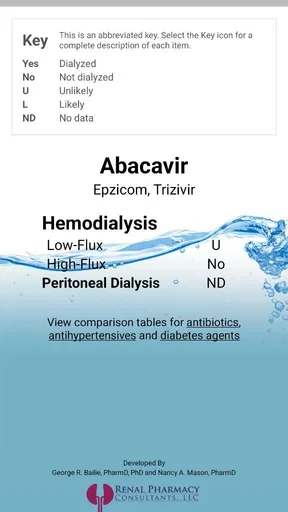
The first successful action should be a focused medication lookup, not a general exploration of every screen. Choose a drug that is relevant to your current work, search for it in the way the app expects, and read the complete entry rather than stopping at the first prominent word. Then ask what that information means for your next professional step.
For me, a lookup is successful only when it changes the workflow in a safe way. That might mean flagging a medication for pharmacist review, checking whether dose timing needs discussion, or confirming that another reference should be consulted. The app earns its place when it reduces the time needed to identify a question, not when it encourages a rushed conclusion.
A realistic example would be a pharmacist reviewing medicines for a person scheduled for dialysis. Instead of relying on memory for every drug, the pharmacist could use the app as an initial screen, note which medicines deserve attention, and then verify the implications using the patient’s treatment details and professional references. This is a much stronger use than handing the phone to a patient and presenting the result as a complete instruction.
Another useful scenario is study preparation. A learner might select several medicines from a renal pharmacotherapy lesson and compare the results, looking for patterns in which therapies require special consideration. The non-obvious benefit here is organizational: the app can turn an abstract topic into a series of concrete questions. The non-obvious risk is that a list of answers can feel more definitive than it really is, so the learner should always connect each lookup to the underlying pharmacology.
Confusion around the subscription
The paid access model is likely to be the biggest surprise for first-time users. The app is free to download, but its store summary states that an in-app subscription is required and lists a yearly price of $21.99. I would not describe the installation as a fully free reference experience. It is more accurate to think of it as a free way to obtain the app and inspect the path toward ongoing access.
That arrangement can make sense for a professional who uses the reference repeatedly. A yearly fee may be reasonable if it saves time during regular renal pharmacy work. For an occasional user, however, the value calculation is different. If you expect to check one medicine once, a subscription may feel disproportionate, and a pharmacist, clinic, or educational institution may already have a preferred resource that is more economical for you.
Before paying, I would confirm which part of the app becomes available after the purchase and whether the access period matches my needs. I would also avoid subscribing merely because the topic feels urgent. Urgency is precisely when a second qualified person should review the clinical question, not when a new user should make a hurried purchase and rely on an unfamiliar reference.
Confusion around what “dialyzable” means
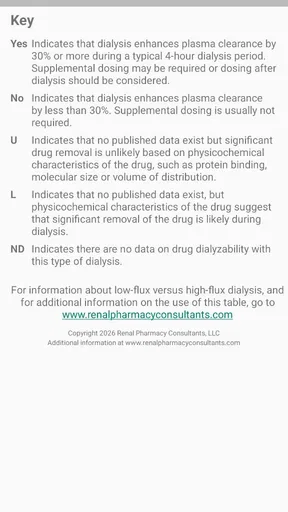
The word itself can create a false sense of simplicity. A medicine may be affected by dialysis in a way that matters clinically, but the practical response is not always obvious from a single label. The significance can depend on the treatment being used and on when the medicine is administered. This is why I would read the app’s result as a prompt for interpretation rather than a standalone dosing order.
A useful habit is to write down three things after every important lookup: the medicine, the dialysis context, and the decision that still needs confirmation. That small workflow prevents the app from becoming a black box. It also makes it easier to explain the issue to a colleague, preceptor, or treating team.
If a result seems surprising, I would not assume the app is wrong or that my memory is wrong. I would check the spelling, confirm that I selected the intended medicine, and compare the finding with a trusted clinical source. This is one of the most valuable advanced habits for a specialist reference: disagreement is a signal to investigate, not a reason to choose whichever answer is more convenient.
How it compares with ordinary alternatives
The usual alternative is not necessarily another app. Many users will reach for a drug reference, institutional database, textbook, clinical guideline, or a pharmacist’s knowledge. Those resources often provide broader information such as dosing, interactions, adverse effects, monitoring, and renal adjustment. Dialysis of Drugs has a narrower potential advantage: it puts dialysis-related medication questions at the center instead of making the user search through a much larger reference.
That narrow focus can save mental effort when the question is exactly about dialysis. On the other hand, a broad professional database may be better when the question includes several connected issues. If I need to evaluate dose adjustment, interactions, monitoring, and dialysis timing together, I would prefer a comprehensive reference or consultation with a specialist rather than switching between a narrow app and several other sources.
It also differs from general kidney-health apps. A wellness app may be easier for patients and may explain conditions in plain language, but it is unlikely to serve the same specialist lookup purpose. Conversely, this app is not the better choice for someone who wants hydration reminders, symptom diaries, or a simple explanation of dialysis itself. The right option depends on whether the user’s central need is medication dialyzability or broader kidney care.
Practical strengths and real limitations
The clearest strength is its subject focus. When I have a dialysis-related medication question, a dedicated reference is more direct than browsing a general medical app. The developer’s specialization also makes the product feel aimed at a real professional problem rather than a collection of loosely related health features.
The main limitations are equally important. The low average rating of 2.1 suggests that many users have encountered an experience that did not meet expectations. I would not ignore that signal, particularly because this is a medical tool where clarity and dependable access matter. The older minimum operating-system requirement may make it available on a wide range of Android devices, but compatibility alone does not guarantee a modern interface or a smooth workflow.
The subscription is another barrier. A free download sounds accessible, yet the required yearly purchase changes the decision for students, occasional users, and patients. The app’s narrow purpose means that the cost is easier to justify for frequent professional use than for curiosity or a single personal question.
There is also a human limitation that no interface can solve: the app cannot know the complete clinical context unless the user brings it into the decision. A quick result may be useful, but it cannot replace patient-specific assessment. In my view, that is not a flaw unique to this product, but it is a reason to be especially disciplined when using it.
Who should skip it?
I would skip this app if I wanted a general medication guide, a patient education tool, or a complete renal dosing system. I would also skip it if I only needed a one-time answer and had access to a pharmacist or an established clinical reference. Paying for a specialist subscription makes most sense when the question comes up often enough to justify keeping a dedicated resource close at hand.
I would be cautious about using it as a first medical app if I had no background in dialysis. In that situation, the better first step would be to ask the care team what the medication question means and which reference they trust. The app may still become useful later, but the learning curve and clinical nuance make it a poor substitute for an explanation from a professional.
The next step after a lookup
Once I have found a relevant entry, I would turn the result into a short verification chain: identify the patient’s dialysis situation, check the medicine’s prescribed use and timing, consult the accepted professional reference, and document the question or decision according to the workplace process. That workflow gives the app a practical role without asking it to do more than it can safely do.
For repeated use, I would evaluate it after several real lookups rather than after the installation alone. Did it help me reach the relevant information quickly? Did its terminology fit my practice? Did I still need another source every time? Those answers will tell a professional more than the store summary can. If the app consistently serves as a useful first screen, the subscription may be worthwhile. If every lookup ends with a search elsewhere, a broader reference may be the better investment.
My final view is cautiously positive for the right audience. Dialysis of Drugs has a valuable, specific purpose, and that specialization can make it helpful during renal medication review. But the low rating, paid access model, and need for clinical interpretation mean I would not recommend it blindly. For a renal pharmacy professional or learner who wants a dedicated starting point for dialysis-related drug questions, it is worth testing carefully; for everyone else, a broader reference or direct professional guidance is likely the safer and more useful next step.
Verdict
Strengths of Dialysis of Drugs
- Useful reference for estimating drug removal during dialysis.
- Covers pharmacokinetic factors such as protein binding and volume of distribution.
- Helpful for students and healthcare professionals reviewing dosing concepts.
- Concise information can support quick clinical research.
- May improve awareness of dose adjustments in renal replacement therapy.
Limitations of Dialysis of Drugs
- Should not replace current prescribing guidelines or specialist advice.
- Drug coverage and dialysis recommendations may be limited.
- Clinical values can vary between dialysis methods and patient conditions.
- Interface or terminology may feel difficult for nonmedical users.
- Incorrect interpretation could lead to unsafe medication adjustments.
Similar Picks in This Category
View All
WebMD: Symptom Checker
WebMD, LLC4.1

Microphone Amplifier
DOSA Apps4.2

Anatomy Learning - 3D Anatomy
3D Medical OU4.5

Period Tracker and Calendar
SimpleInnovation4.9

GoodRx: Prescription Coupons
GoodRx4.8

CVS Health
CVS Pharmacy4.5
Frequently Asked Questions
What is Dialysis of Drugs, and what is the app used for?
Dialysis of Drugs is an educational and reference application focused on the principles of drug dialysis, including how medications move across membranes and how factors such as molecular size, protein binding, concentration, and membrane properties affect the process. It may be useful for pharmacy, medicine, nursing, and laboratory science students who want a convenient way to review concepts outside the classroom.
Is Dialysis of Drugs suitable for beginners or only for healthcare students?
The app can be helpful for beginners, but its usefulness depends on your existing knowledge of chemistry, pharmacology, and laboratory methods. New learners may understand the basic explanations and terminology, while healthcare or science students will likely benefit more from the technical details. It should be treated as a study aid rather than a complete replacement for textbooks, lectures, or supervised practical training.
Can I use this app to determine the correct dialysis treatment or medication dose?
No. Dialysis of Drugs should not be used to make personal treatment decisions, adjust medication doses, or replace advice from a qualified healthcare professional. Drug removal during clinical dialysis depends on many patient-specific factors, including kidney function, dialysis settings, the medication involved, and timing. Always consult a physician, pharmacist, or dialysis specialist before changing any treatment.
Does Dialysis of Drugs work without an internet connection?
Access to the app’s main educational material may depend on how it was designed and on the platform version installed on your device. Some reference content may be available offline after installation, while updates, external links, advertisements, or additional resources may require an internet connection. If offline study is important to you, check the app-store description and test its core sections before relying on it during travel or clinical placements.
Is Dialysis of Drugs free, and does it contain advertisements or in-app purchases?
The cost and monetization model can vary between Android and iOS versions and may also change after updates. Before downloading, review the official store listing for the current price, advertisements, subscriptions, and in-app purchase information. If the app is free, some features or content may still be limited. Confirm the developer, permissions, privacy details, and recent user reviews before installing it.
